Tuesday, August 30, 2016

100th Annual MN AWWA Conference: Attendee Toolkit

Join Us in a SOCIAL TOAST to the
100th Annual Minnesota AWWA Conference!

STEP ONE: CONNECT WITH US!
Go to the Minnesota AWWA social media sites and follow/connect with us for conference updates.

Please note: To create real/true activity, you MUST do more than follow...please create posts, like, share, comment, tweet, retweet, etc.

STEP TWO: GET ACTIVE!
Shout about the conference on your own social media platforms!

FACEBOOK
Join the Facebook Event page referenced above. Please share your updates, posts and please share your excitement! Use @ in your posts to tag the @Minnesota AWWA Facebook page.


TWITTER
Use the official 100th Annual Minnesota AWWA Conference hashtag #MNAWWA to share updates, stay current during the conference and WIN prizes. There will be a Twitter contest during the conference. Keep an eye out for special offers from local establishments throughout the conference as well.


STEP THREE: HELP US HELP YOU!
Have any materials to share about the conference? Send them to jordan@daytamarketing.com and we will be glad to advertise and share your excitement!

We've also created some material for you to share:

100th Annual Minnesota AWWA Conference Blog: http://bit.ly/2bxDefz

100th Annual Minnesota AWWA Conference Video: https://www.youtube.com/watch?v=Rd4-6ieV83E

100th Annual MN AWWA Conference: Vendor Toolkit

Join Us in a SOCIAL TOAST to the
100th Annual Minnesota AWWA Conference!

STEP ONE: CONNECT WITH US!
Go to the Minnesota AWWA social media sites and follow/connect with us for conference updates.

Please note: To create real/true activity, you MUST do more than follow...please create posts, like, share, comment, tweet, retweet, etc.

STEP TWO: GET ACTIVE!
Shout out to attendees and vendors! Create activity! The more the merrier!

FACEBOOK
Join the Facebook Event page referenced above to advertise your activities, promote your booth/company/services, share updates, posts and please share your excitement! Use @ in your posts to tag the @Minnesota AWWA Facebook page.

Here are some example posts to get you started (attach graphics to posts as needed):
  • @Minnesota AWWA members - stop by our booth for more information about (insert company description). 
  • Attention @Minnesota AWWA members! Pick up your (insert company name) swag at booth # (insert booth number). We can't wait to see you at the 100th Annual Conference!
  • @Minnesota AWWA members: Don't be uncouth, visit our booth while you're in Duluth!

TWITTER
Use the official 100th Annual Minnesota AWWA Conference hashtag #MNAWWA to share promotions.

Here are some example tweets to get you started (attach graphics to tweets as needed):

STEP THREE: HELP US HELP YOU!
Have you created any photos, graphics, articles, promos or videos for this year's conference? Send them to jordan@daytamarketing.com and we will be glad to advertise and share your excitement!

We've also created some material for you to share:

100th Annual Minnesota AWWA Conference Blog: http://bit.ly/2bxDefz

100th Annual Minnesota AWWA Conference Video: https://www.youtube.com/watch?v=Rd4-6ieV83E

100th Annual MN AWWA Conference: Local Establishment Toolkit

Join Us in a SOCIAL TOAST to the
100th Annual Minnesota AWWA Conference!

STEP ONE: CONNECT WITH US!
Go to the Minnesota AWWA social media sites and follow/connect with us for conference updates.

Please note: To create real/true activity, you MUST do more than follow...please create posts, like, share, comment, tweet, retweet, etc.

STEP TWO: GET ACTIVE!
Shout out to attendees and vendors! Create activity! The more the merrier!

FACEBOOK
Join the Facebook Event page referenced above to share updates, posts, special offers, promotions for dinner specials, tag vendors/conference attendees and please share your excitement! Use @ in your posts to tag the @Minnesota AWWA Facebook page.

Here are some example posts to get you started (attach graphics to posts as needed):

TWITTER
Use the official 100th Annual Minnesota AWWA Conference hashtag #MNAWWA to share promotions and specials.

Here are some example tweets to get you started (attach graphics to tweets as needed):

STEP THREE: HELP US HELP YOU!
Have you created any special offers, articles or graphics to welcome Minnesota AWWA members to this year's 100th Annual Conference? Send them to jordan@daytamarketing.com and we will be glad to advertise and share your excitement!

We've also created some material for you to share:

100th Annual Minnesota AWWA Conference Blog: http://bit.ly/2bxDefz

Thursday, August 18, 2016

A Preview of MN AWWA's 100th Annual Conference

Preview of.jpg

At the Minnesota chapter of the American Water Works Association, we are celebrating 100 years of dedication to clean water, public health, and educational development. This year, the Minnesota American Water Works Association will host the 100th Annual Conference in Duluth, a conference sure to be full of educational and interactive opportunities as well as celebrations of 100 years of waterworks excellence.

The 100th Annual Conference will take place Tuesday, September 20th through Friday, the 23rd at the Duluth Entertainment and Convention Center. The three-day event will feature one day of exhibits and two days of concurrent technical sessions.

Be sure to make it to Tuesday’s events in order to help raise funds for Water for People. The organization was developed by the American Water Works Association in 1991 to promote the development of accessible, high-quality drinking water and sanitation services. For more information on Water for People, visit waterforpeople.org.

Attend this year’s opening general session on Wednesday to view a Smithsonian Exhibit, the keynote presentation, “The History of Water” as presented by American Water Works Association CEO David LaFrance, and a presentation from Future of Water author Steve Maxwell.

This year’s exhibits will feature products and services from nearly 100 vendors as well water competitions such as the Pipe Tapping, Meter Madness, and Hydrant Hysteria.
To celebrate the 100th special event, the Minnesota American Water Works Association will provide two social events on September 21st— a reception at Clyde Ironworks and a brewery circuit around Duluth. Be sure to visit the Water Museum which will open on the 21st.  On September 22nd, the conference will feature an attendee appreciation dinner featuring comedian David Harris and a team trivia tournament.

Join us at the farewell lunch for a special presentation by the City of Minneapolis, winner of the 2016 American Water Works Association Diversity Award.

For a more comprehensive list of events and dates celebrating 100 years of excellence, visit the annual conference program details.

What better place to celebrate than on the waterfront of beautiful Lake Superior? We hope to see you there!

Tuesday, August 2, 2016

Summer Water Activities for Your Family

August has arrived, which means many children across the state are scrambling to cram as much summer fun in as possible before the new school year begins. During the hottest month of the year, this usually involves water of some kind. That’s why we’ve compiled a list of water-related activities that you can do with your kids right in your own backyard:

shutterstock_404119333.jpg

Simple Backyard Splash Pad
Many homeowners are wary of at-home water activities because they wreak havoc on your lawn. You can have just as much fun at home without installing a pool or killing your grass; all you need is a tarp. It’ll act as a splash pad, slip-n-slide, and all-around water activity area—just add water. The best part is, when you are done, just roll up the tarp and put it away!

Sponge Ball Fight
Do your kids love water balloons, but don’t like to clean up the empty, broken balloon pieces after the fight is over? Check out these DIY splash balls for a fun, clean alternative to a summertime classic. Using sponges and buckets of water, this version of the game will be quicker, easier, and a lot more fun!

Duck, Duck, Wet Duck
This game is pretty self-explanatory; it’s just duck, duck, gray duck with water! Replace the word “Gray” (or goose, if that’s how you play) with “wet” and squeeze a sponge over the player’s head! If you’re looking for a cool, quick accessory to the game, you can use the sponge splash balls mentioned above.
shutterstock_212230843.jpg
Water Limbo
This one is also simple and requires just a hose with a nozzle. Instead of playing traditional limbo, use a hose with a nozzle attachment in place of a stick and take turns trying to go as low as you can.

Summer is the time to visit the lake, pool, or nearest body of water to keep cool. If your kids can’t always make it to the lake, there are tons of great water activities that you can do right at home.

What are your favorite backyard water games? Comment below, we’d love to hear them!

Thursday, June 16, 2016

How to Purify Water While Camping

germany-993843_640.jpg

When camping, one of the most important items of need is access or the ability to obtain clean water. It will be your source of hydration, energy, and sustenance. While bottled water is convenient, it can add a lot of weight to your camping gear haul, not to mention the burden on the environment caused by producing bottled water. Learning to find a source and purify water when camping can eliminate a few gallons from your camping gear and can help eliminate plastic waste from the environment. And it’s easy to learn!

Purifying your own drinking water is simple, inexpensive, and, most importantly, ensures a safe and sanitary source of drinking water. Consider the following methods when purifying water while camping:

Finding a Source

If you are camping in a state park or campground, there will likely be a supply of water nearby, such as a well or spout in which you can find water. From there, filtering isn’t usually an issue, unless you are worried about taste. To find a smart supply of water in more rugged terrain, look for clear, flowing streams. Lake and pond water are stagnant and more likely to hold contaminants and bacteria. Collecting condensation from tree branches and leaves can be effective, but takes a lot of patience. Treated snow and ice are smart options for when you are winter camping.


Portable Filters
Portable water filters can be an effective, albeit more expensive option for purification. With effective maintenance, portable water filters are compact and easy to use and there is a variety of options on the market. Look for filters equipped with either carbon or ceramic filters or look for filters that treat water with iodine or other chemicals to kill viruses.

One option is the SteriPEN - a small, battery-powered device that emits UV light and destroys bacteria. All you need to do is dip the pen into your water bottle and stir for about a minute. The newer version of the SteriPEN comes in an even smaller, more travel-friendly design and includes a micro USB charging port, though it boasts 40 purifications between charges.

5886307972_6c7fb450f6_z.jpgBoiling


Boiling water can be the most effective way to purify water. In small batches, bring water to a rolling boil for at least five minutes to kill any microorganisms existing in the water. Wait for the water to cool, and remember that this method does not remove non-living contaminants, so you may need to filter it slightly beforehand. Boiling water is often the easiest for large groups like families and requires just a boiling pot over a campfire.

Image by Martin Cathrae via Flickr

Iodine Treatment

Another simple method for water purification is iodine treatment. It is often considered the most effective at killing most pathogens, although it will not remove sediment. Coming in the form of iodine tablets, crystals or liquid iodine, this is a process that is easy, inexpensive, and lightweight. Dissolve iodine in water while stirring constantly for at least 30 minutes. Use five drops of liquid 2% iodine for every quart of water and follow the manufacturer's details for iodine crystals and tablets. The iodine can leave a slight aftertaste, but neutralizing tablets are also available and effectively counteract the aftertaste.

When camping, water will be your biggest asset in keeping you energized, regulating body temperature, and in enhancing your physical performance. Make sure to keep a steady supply of water with you at all times and challenge yourself to learn how to purify water in the event of camping emergencies.

For more information on water conservation and protecting our resources, visit our website.

Friday, May 20, 2016

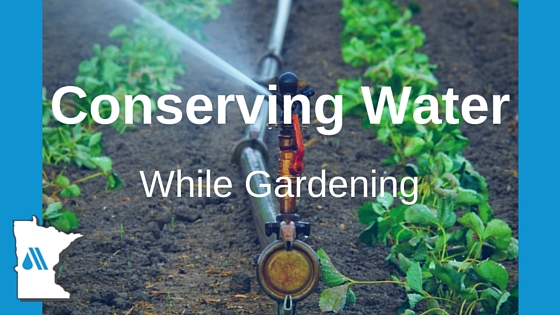
Conserving Water While Gardening

Conserving Water.jpg
A concern for gardeners is the efficient use of water. Gardeners of any variety of plants may struggle with managing water to best promote plant growth. Gardeners with insufficient water resources or who experience low natural moisture may have to resort to manually watering their gardens. Conserving water effectively can save money and help reduce water waste in your community. Here are some ways that you can conserve and manage water efficiently while gardening:

Care for Your Soil

The way you look after your soil can determine the success of your garden and lawn. Conduct a pH test to determine the quality of soil at the beginning of the season. Add organic matter such as bark clippings, ground-up leaves, pine needles, and grass clippings to help retain moisture. Adding mulch to the base of your flower bed, shrubs, and trees in spring can help your plants retain moisture and prevent evaporation during dry periods.

Water Appropriately

Research has shown that when you water your plants can have a significant impact on plant growth. The best time to water your garden is early in the morning before temperatures rise. Winds tend to be lower and there is much less evaporation occurring in the atmosphere. It is also a good rule of thumb to water plants whenever they show signs of distress, which can be at any time of the day. Avoid evening watering as it can encourage fungal growth. For potted plants in your garden, water them in the afternoon. Container plants often have rates of lower moisture retention, meaning they dry out more quickly.

Don’t Waste Water

Save and reuse water when you can. Use a big barrel or rainwater system in your garden to harvest rainwater and roof runoff. (Learn more about how to develop a rainwater system here.) Even saving cooled water that you have used for cooking or water that was used in a fish tank can help prevent waste and give additional nutrients to your plants.

watering-can-823866_640.jpg

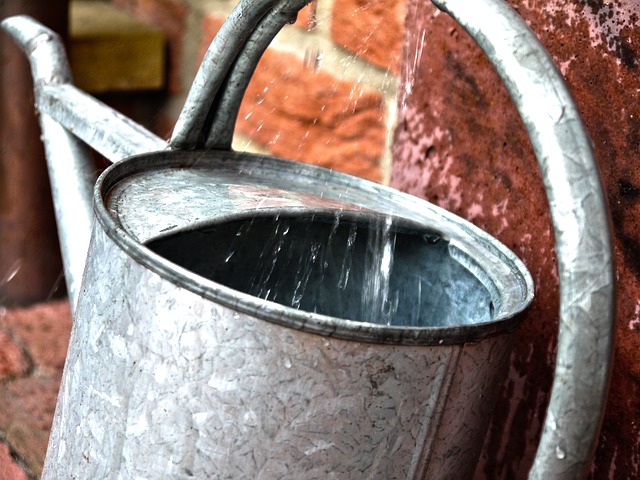
When you do water your plants, don’t focus on watering the foliage as that doesn’t contribute much to the growth of the plant. Focus on watering within the root zone, which is approximately 1 to 3 times the diameter of the canopy of the plant. Stop if the water is pooling, and allow the roots to soak up the water before resuming. There is such a thing as over watering a plant, so don’t drown your plant as it robs the roots of air and causes root rot and soil compaction.

The most important way to prevent water waste is to water mindfully; use your sprinkler deliberately because water won’t help your driveway, sidewalks, or patio.

Choose Your Plants Wisely

What you choose to plant in your garden will make a big difference in how much effort you will have to put into your garden. Look into growing native plants. Native plants will be able to quickly adapt to your garden and will require minimal care on your part. Pick appropriately-sized plants and give them plenty of room to grow. Don’t opt for a bush that grows up to 10 feet if you only need a five-foot shrub in your front yard. Overcrowding plants can impede the growth of your garden, as well.

Consider the time you add plants to your garden as well. Adding plants to your garden at the end of fall or in the beginning of spring when it’s still cool will help those plants grow and establish a healthy root system.

Watering mindfully can save thousands of gallons of water a year, reduce water use by 50%, and shave hundreds of dollars off your water bill. Take a few of these tips to heart this season, and you’ll have a green thumb and a greener wallet.